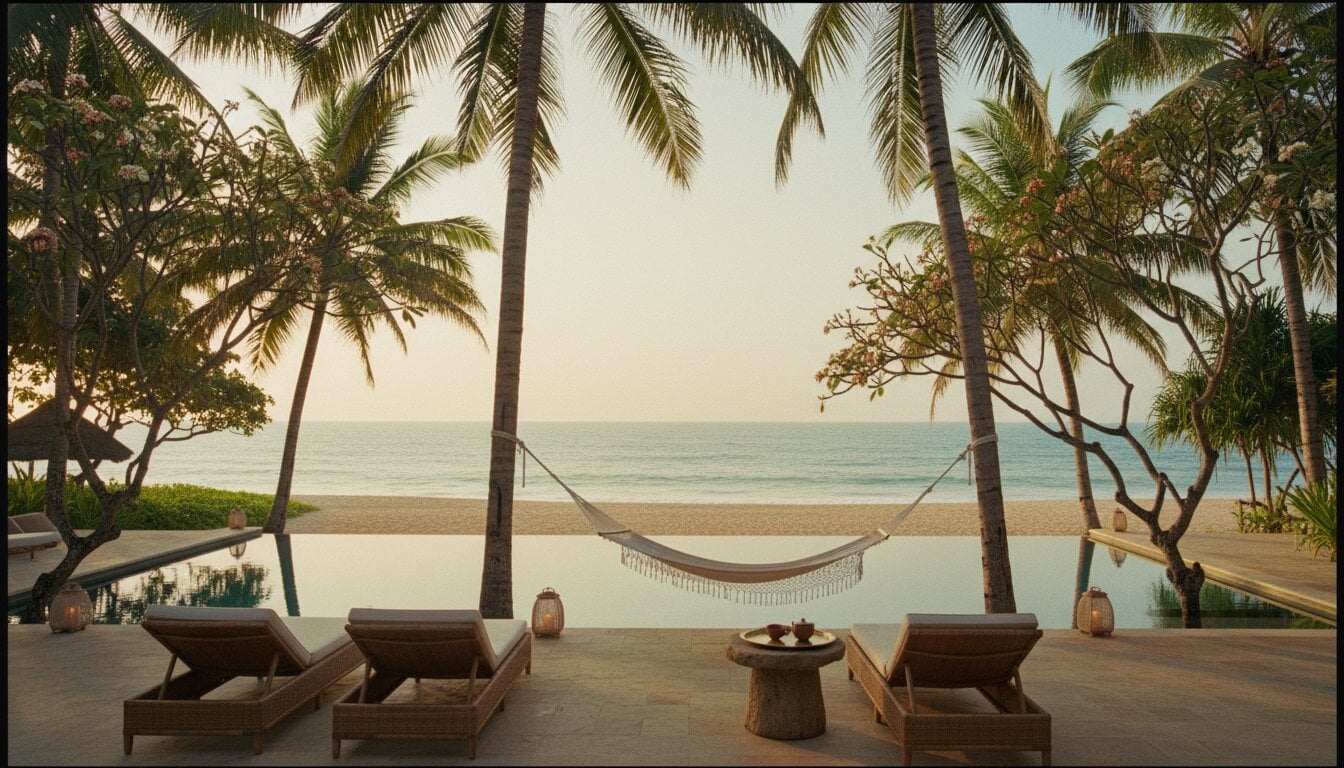
Sri Lanka packs an extraordinary range of natural environments into an island roughly the size of Ireland. Within a single day's drive you can move from mangrove-lined lagoons on the coast to cloud forest in the central highlands, passing spice gardens, river deltas, and ancient tanks along the way. That compression of landscape — combined with the island's position at a biogeographic crossroads between Asia and the Indian Ocean — makes it one of the world's most rewarding destinations for naturalists, wildlife photographers, and anyone who simply wants to spend time outdoors.
What makes Sri Lanka's biodiversity so remarkable?
Sri Lanka sits within the Western Ghats–Sri Lanka biodiversity hotspot, one of 36 globally recognised hotspots. The island's relative isolation over millions of years allowed species to evolve independently, producing a high rate of endemism: roughly 26 percent of its flowering plants, more than half of its land mammals, and a substantial share of its amphibians are found nowhere else on Earth.
Key endemic mammals include the Sri Lankan leopard (Panthera pardus kotiya), the Sri Lankan elephant (Elephas maximus maximus), and the purple-faced langur. Among birds, the island hosts around 34 endemic species, including the Sri Lanka blue magpie, the red-faced malkoha, and the Sri Lanka junglefowl — the national bird. For birders, the island's forests reward patience at almost every elevation.
Which national parks and reserves are most important for wildlife?
Sri Lanka's protected area network covers around 30 percent of the island's land surface, a figure few tropical nations can match. The parks vary dramatically in character.
- Yala National Park — the most visited park, known for one of the world's highest densities of wild leopards, as well as elephants, sloth bears, and abundant birdlife along its lagoons.
- Udawalawe National Park — centred on a reservoir, this dry-zone park reliably delivers elephant sightings year-round and is home to a dedicated elephant transit home for orphaned calves.
- Wilpattu National Park — Sri Lanka's largest park by area, with a network of natural lakes called villus that attract leopards, sloth bears, and waterbirds in a landscape that sees far fewer visitors than Yala.
- Horton Plains National Park — a montane grassland plateau at around 2,100 m, home to sambar deer, endemic birds, and the dramatic cliff-edge viewpoint known as World's End.
Beyond the flagship parks, the Elephant Transit Home near Udawalawe operates a rehabilitation programme for wild elephants, offering visitors a transparent window into Sri Lanka's conservation work.
What is Sinharaja Forest Reserve and why does it matter?
The Sinharaja Forest Reserve is Sri Lanka's last large tract of primary lowland rainforest and a UNESCO World Heritage Site. Spread across the wet zone of the island's southwest, it receives some of the highest rainfall in Sri Lanka, sustaining a closed-canopy forest of extraordinary complexity. More than 60 percent of Sinharaja's endemic trees are found here, and the reserve is famous among birders for its mixed-species feeding flocks — groups of 10 to 20 species that move through the canopy together at dawn.
Sinharaja is not a national park in the conventional sense: access is managed and visitor numbers are kept low to protect the habitat. Guided walks along designated trails are the standard way to explore it, typically departing from the village of Kudawa or Pitadeniya.
What other forest ecosystems can travellers explore?
Sinharaja is the most famous, but Sri Lanka has several other forest reserves worth seeking out.
- Makandawa Rainforest — located near Kitulgala on the Kelani River, this wet-zone forest is accessible to day visitors and is a productive area for endemic birds. The same river is a hub for white-water rafting.
- Kanneliya Forest Reserve — part of the Kanneliya-Dediyagala-Nakiyadeniya complex in the southern wet zone, with waterfalls, natural rock pools, and some of the island's tallest trees.
- Cloud forest in the central highlands — the upper slopes of Knuckles, Pidurutalagala, and the terrain surrounding Horton Plains support montane cloud forest characterised by dense mosses, epiphytic orchids, and persistent mist.
How do wetlands and waterways support Sri Lankan wildlife?
Sri Lanka's rivers and wetlands are as ecologically significant as its forests. The island has a dense network of rivers — the Mahaweli, Kelani, Kalu, and Walawe among the largest — and thousands of ancient irrigation reservoirs (wewa) built over two millennia of civilisation. These man-made lakes function as de facto wildlife sanctuaries, attracting waterbirds, crocodiles, and elephants that come to drink.
The Madu Ganga estuary near Balapitiya is one of the most rewarding wetland experiences on the island. A Madu River Safari by motorised boat passes through a labyrinth of mangrove islands, with opportunities to see water monitors, brahminy kites, and cinnamon-bark trees growing at the water's edge. The estuary is a Ramsar-listed wetland of international importance.
Other wetlands of note include the Muthurajawela marsh north of Colombo — the country's largest peat bog — and the Anawilundawa Wetland Sanctuary between Chilaw and Puttalam, which provides crucial habitat for migratory waterbirds on the east Asian–Australasian flyway.
What marine wildlife can visitors encounter along the coast?
Sri Lanka's coastline stretches for around 1,340 km and includes coral reefs, seagrass beds, and open ocean — each supporting distinct wildlife communities. The island sits along a whale migration corridor, and blue whales are regularly sighted in the waters off Mirissa and Trincomalee, depending on the season. Spinner dolphins are common and often approach boats in large pods.
Five of the world's seven sea turtle species nest on Sri Lankan beaches, including the green, leatherback, loggerhead, hawksbill, and olive ridley. Conservation projects at Kosgoda and Hikkaduwa operate hatcheries that protect eggs from predation and release hatchlings into the sea. Pigeon Island near Nilaveli offers snorkelling over intact coral gardens with blacktip reef sharks and hawksbill turtles.
For those interested in sport fishing, deep sea fishing charters operate out of several coastal towns, targeting yellowfin tuna, wahoo, and marlin in Sri Lanka's deep offshore waters.
What role do spices and tea play in Sri Lanka's natural landscape?
Sri Lanka's agricultural landscapes are as much a part of its natural identity as its forests and parks. The island is the world's fourth-largest tea producer, and the central highlands between roughly 900 m and 2,200 m are carpeted with tea estates. Visiting a working estate — such as those around Nuwara Eliya or the Bluefield Tea Gardens — gives a clear sense of how the industry has shaped the highland ecology alongside its economics. Ceylon Tea production depends on a specific combination of altitude, rainfall, and temperature that the highlands uniquely provide.
The southwestern lowlands are the heartland of Sri Lanka's spice trade, which dates back more than 2,000 years. True cinnamon (Cinnamomum verum) is endemic to Sri Lanka, and the island remains the primary source of high-quality cinnamon globally. Spice gardens in the Galle and Matale areas grow black pepper, cardamom, nutmeg, cloves, and vanilla alongside cinnamon, offering guided walks that explain both cultivation and medicinal uses.
When is the best time to visit Sri Lanka for nature?
There is no single best time — the island has two distinct monsoon seasons that affect different regions at different times, which means wildlife watching is possible year-round if you plan your itinerary with the seasons in mind.
| Region | Best months | Main draw |
|---|---|---|
| Southern & western parks (Yala, Udawalawe) | December–April | Dry conditions concentrate wildlife at waterholes |
| Northern & eastern parks (Wilpattu, Kaudulla) | May–September | Inter-monsoon dry spell; elephant gatherings |
| Central highlands (Horton Plains) | January–March | Clearest skies, best visibility at World's End |
| Southwest coast (whale watching) | November–April | Blue whales off Mirissa |
| Sinharaja Forest | February–April, August–September | Between monsoon peaks; drier trails |
Sri Lanka's size means a well-designed itinerary can include both a dry-zone wildlife park and a wet-zone rainforest in the same trip, even in a week.
How does Sri Lanka approach conservation and eco-tourism?
The island has a long tradition of wildlife protection — the world's first wildlife sanctuary is generally credited to King Devanampiya Tissa, who established a protected zone near Mihintale around 247 BCE. Modern conservation is managed through the Department of Wildlife Conservation and the Forest Department, with support from international organisations and an increasingly active community of local NGOs.
Eco-tourism has grown steadily as an alternative livelihood for communities living adjacent to protected areas. Village experiences in destinations such as Sigiriya Village and working farms like Midigama Fruit Farm offer travellers direct engagement with traditional land-use practices. Kitul tapping — the harvesting of sap from the fishtail palm to make treacle and jaggery — is one such tradition that remains active in rural communities and can be observed through dedicated experiences.
Sri Lanka's protected areas are managed under guidelines from the IUCN, and several national parks hold recognition as Ramsar wetlands or UNESCO biosphere reserves, reflecting the island's standing in global conservation frameworks.