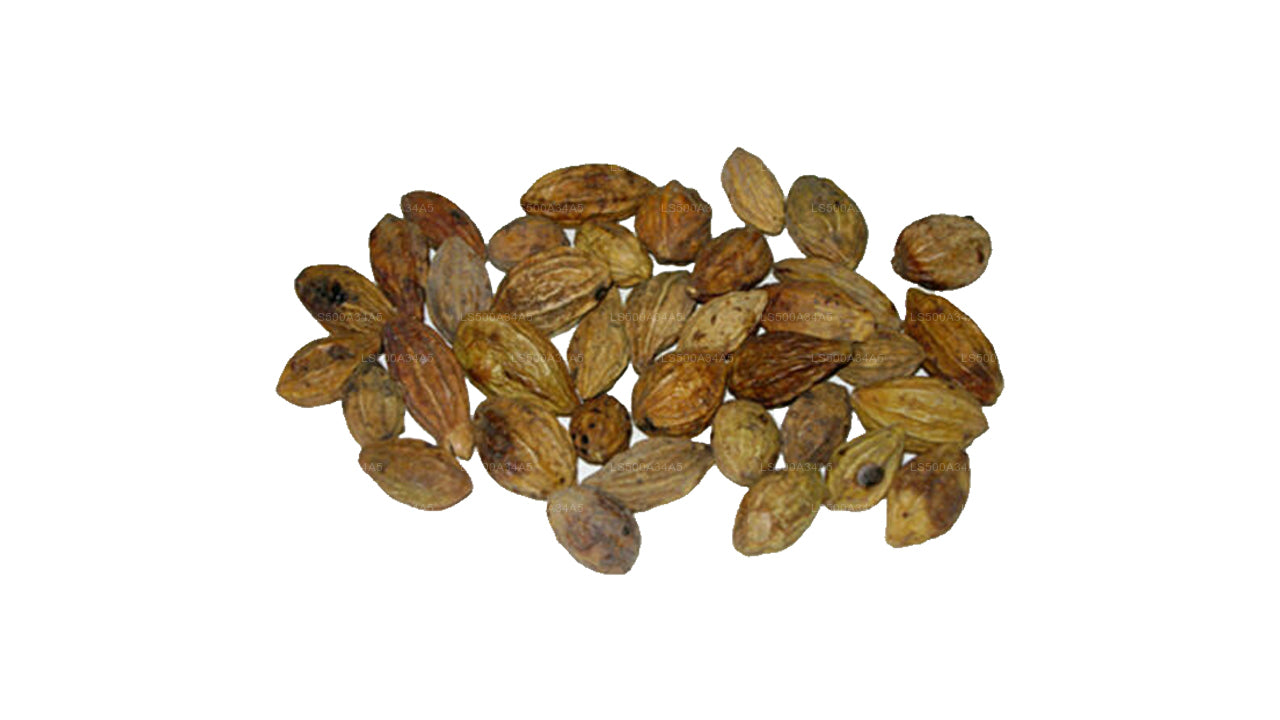
Terminalia bellirica, commonly called Bulu in Sri Lanka and Baheda or Bibhitaki across South Asia, is a large deciduous tree belonging to the family Combretaceae. It grows widely across the plains and lower hills of South and Southeast Asia, and is frequently planted as a roadside avenue tree. Within Ayurvedic tradition, it holds a place of quiet authority — one of three fruits that together form triphala, arguably the most widely prescribed herbal compound in classical Indian medicine.
What is Terminalia bellirica and where does it grow?
The tree is native to tropical and subtropical Asia, found from Sri Lanka and India through Myanmar, Thailand, and into parts of China. It thrives in moist deciduous forests, typically at lower elevations, and can reach considerable height when mature. Two botanical varieties are recognised in India: one bearing nearly globular fruit roughly one to two centimetres in diameter, and another producing larger, ovate fruit. Both varieties are harvested from the wild and cultivated for their medicinal fruit.
In the Malwa region of Madhya Pradesh, India, wild-collected Baheda fruits are traded in significant volumes, with the town of Neemuch historically serving as a major commercial hub for both skinless and whole T. bellirica fruits.
What are the traditional Ayurvedic uses of Bibhitaki?
In Ayurveda, Terminalia bellirica fruit is classified as Bibhitaki — a word derived from the Sanskrit root meaning roughly "that which removes fear of disease." Classical texts describe its fruit pulp as astringent and laxative in character, and it has long been prescribed, often combined with salt and long pepper, for infections of the throat and chest.
The kernel has historically been applied externally to inflamed areas. Because of its reputed action on bodily wind (vata), the tree carries the Sanskrit synonym Anila-ghnaka, or "wind-killer." Ancient Nighantus (Ayurvedic lexicons) also note that the kernels possess narcotic properties, a quality that historically kept some communities cautious around the tree.
- Respiratory health: Fruit pulp prescribed for throat and chest infections
- Digestive support: Used as a gentle laxative in classical formulations
- Anti-inflammatory: Kernel paste applied topically to inflamed tissue
- Triphala constituent: Combined with Haritaki (T. chebula) and Amalaki (Phyllanthus emblica) in the foundational three-fruit compound
What does the Charaka Samhita say about Bibhitaki?
The Charaka Samhita, one of the foundational texts of Ayurvedic medicine, attributes broad restorative properties to Bibhitaki fruit. It is cited as capable of alleviating disease, supporting longevity, and enhancing intellectual clarity and physical strength. The text describes several rasayana (rejuvenation) preparations that incorporate Bibhitaki, positioning it not merely as a remedy for acute illness but as a tonic for long-term wellbeing.
One particularly notable reference concerns the Fourth Amalaka Rasayana, in which Bibhitaki appears among fruits said to restore youth and sustain vigorous health across many years of ascetic practice. While these descriptions belong to classical literature rather than modern clinical language, they reflect the deep cultural weight that T. bellirica carries in the traditions of the subcontinent.
What is the role of Terminalia bellirica in triphala?
Triphala — literally "three fruits" in Sanskrit — is a preparation combining Bibhitaki, Haritaki (Terminalia chebula), and Amalaki (Phyllanthus emblica). It is one of the oldest and most prescribed formulations in Ayurvedic medicine, used across a remarkably wide range of conditions. Each fruit is considered to influence a different physiological principle (dosha), and the combination is valued precisely because of their complementary effects.
Bibhitaki's contribution to triphala is principally its astringent quality and its traditional association with the kapha dosha. Modern research into triphala is ongoing, and the compound has attracted scientific interest for its antioxidant properties, though clinical evidence for specific health claims continues to develop.
How is Terminalia bellirica regarded in folklore and cultural practice?
Despite its medicinal prestige, the tree occupies an ambiguous place in North Indian folk belief. Classical sources note that Hindus of some northern communities historically avoided sitting beneath its shade, associating the tree with demonic presence. This cultural ambivalence — a plant that heals yet inspires unease — is not uncommon among powerful medicinal species across South Asian traditions.
In Sri Lanka, where it is known as Bulu, the tree does not carry the same folkloric stigma and is regarded primarily through the lens of its therapeutic value in both Ayurvedic and traditional Sinhala medicine.
How does Terminalia bellirica relate to other Terminalia species?
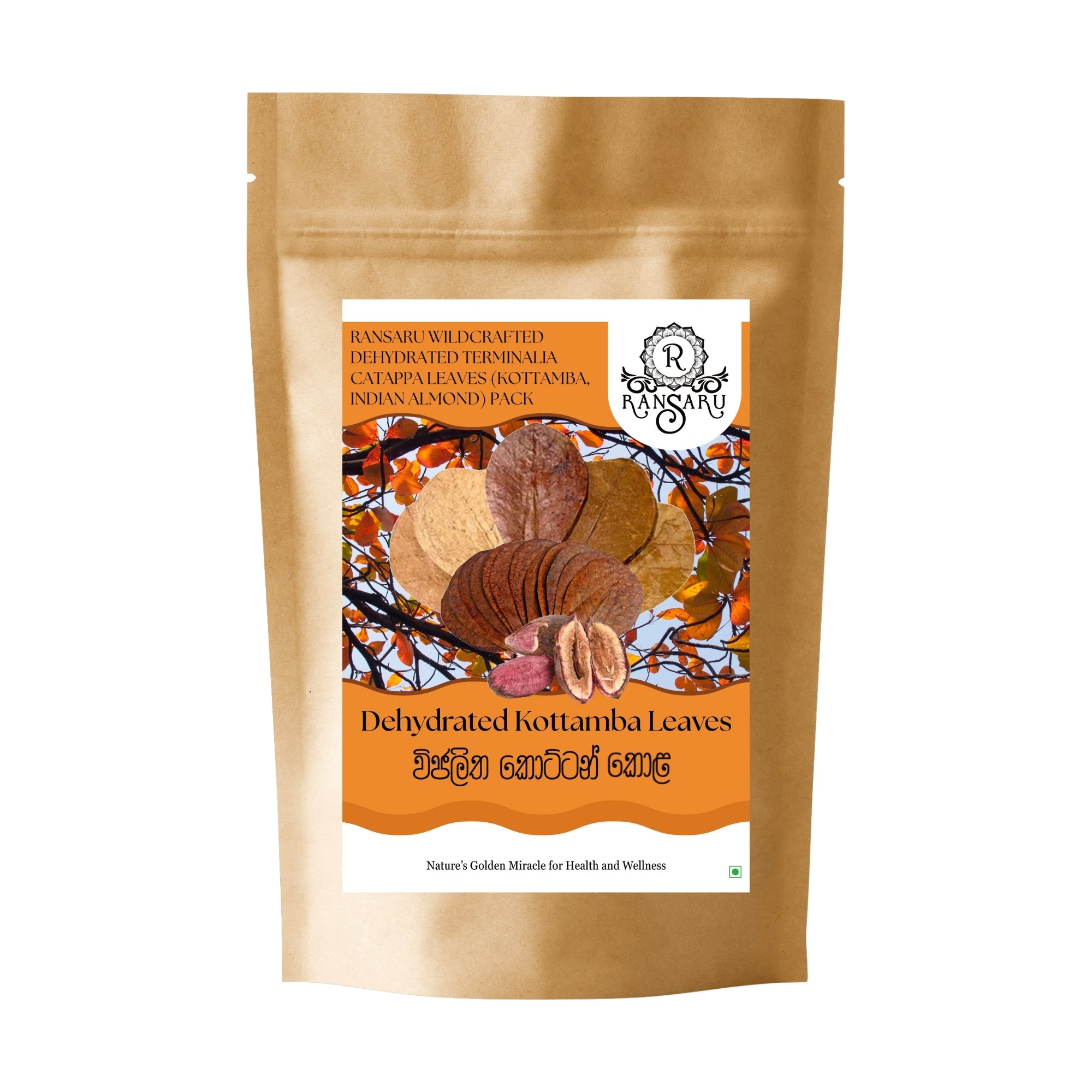
The genus Terminalia is notably well represented in Sri Lanka and South Asia. Closely related species include Terminalia chebula (Aralu or Haritaki), valued similarly in Ayurveda for digestive and rejuvenative properties, and Terminalia catappa (Kottamba or Indian Almond), whose leaves and seeds have both culinary and therapeutic uses. All three species share the Combretaceae family and a common thread of ethnobotanical significance, though each has a distinct phytochemical profile and traditional application.
Understanding the distinctions between these species matters when sourcing Terminalia products, since they are sometimes grouped loosely under the "myrobalan" umbrella in trade contexts.