Ceylon is the name by which Sri Lanka was known to the world for most of its recorded colonial history — from Portuguese cartographers in the early 16th century through to independence in 1948. The name endures today in the country's most celebrated exports: Ceylon Tea, Ceylon cinnamon, and Ceylon sapphires. Understanding what Ceylon was — and how it became the Sri Lanka travellers visit today — adds a layer of meaning to every temple, tea garden, and ancient city you encounter on the island.
How did Ceylon get its name?
The origins of "Ceylon" trace back through Portuguese Ceilão and Dutch Zeilan to the Sanskrit Siṃhaladvīpa, meaning "island of the Sinhala people." Arab traders recorded it as Serendib — the root of the English word "serendipity." Each colonial power reshaped the name to suit its own tongue, but the underlying reference to the island's dominant community remained consistent across centuries. When the country became a republic in 1972, it formally adopted the name Sri Lanka, reclaiming a term that predates colonial contact.
What was colonial Ceylon like?
The Portuguese arrived in the early 16th century and established coastal footholds, followed by the Dutch in the mid-17th century. The British took control in 1815 after the fall of the Kandyan Kingdom — the last independent monarchy on the island — and unified the whole island under a single colonial administration for the first time. Under British rule the plantation economy expanded rapidly: coffee initially, then tea, rubber, and coconut after a devastating coffee blight in the 1870s. The hill country was transformed by estates, and waves of Tamil workers were brought from South India to work them, reshaping the island's demography in ways that still resonate today.
Colonial Colombo grew into a major Indian Ocean port. The British also invested in railways, roads, and English-language education — infrastructure that, paradoxically, equipped a new educated class to articulate and organise nationalist opposition to British rule.
How did Ceylon achieve independence?
The forces of nationalism gathered momentum during and after World War I. Civil disturbances in 1915 — initially a minor communal riot — were met with sweeping British arrests of Sinhalese leaders. The heavy-handed response united communities that had previously kept separate. Leaders across ethnic and religious lines came together in 1919 to form the Ceylon National Congress, a body that united Sinhalese and Tamil organisations around shared constitutional demands: an elected majority in the legislature, control of the budget, and a greater role in the executive branch.
A new constitution promulgated in 1920 under Governor Sir William Manning began the slow transfer of legislative power. A revised constitution in 1924 increased the number of territorially elected members. The landmark constitution of 1931, framed on the recommendations of a reform commission, went further still: it established a State Council with both legislative and executive functions, introduced seven ministerial committees whose chairmen together formed a board of ministers, and — critically — granted universal suffrage, bringing all Ceylonese into the democratic process regardless of gender, literacy, or property.
The question of communal versus territorial representation proved divisive. Sinhalese leaders favoured universal territorial representation; minority communities, including Tamils and Muslims, preferred reserved communal seats that guaranteed their voice. These tensions produced the first fractures within the nationalist movement, with minority groups breaking away from the Congress to form their own organisations — fault lines that would shape post-independence politics for decades.
During World War II, Ceylonese leaders broadly cooperated with British war efforts while pressing quietly for greater autonomy. In 1944 the British appointed the Soulbury Commission to draft a new constitution. The resulting Soulbury Constitution granted internal self-government while retaining imperial oversight in defence and external affairs. The Ceylon Independence Act of 1947 conferred dominion status, recognising Ceylon as an autonomous entity within the British Commonwealth. Full independence was proclaimed on 4 February 1948 — a date celebrated annually as National Day.
How did society change under colonial rule?
Economic development and the spread of English-medium education reshaped Ceylonese society in ways that cut across traditional caste structures. Upper elements of dominant castes reinforced their positions by engaging with new commercial and professional opportunities, while communities of traditionally lower status used the same openings to improve their standing — creating internal tensions within caste hierarchies. Out of this ferment emerged a professional and entrepreneurial middle class, proficient in English and politically articulate. This group went on to lead the independence movement and to dominate governance, business, and civil society throughout the 20th century.
Buddhism and Hinduism experienced organised revivals during the late 19th and early 20th centuries, partly as cultural resistance to Christian missionary education and partly as vehicles for nationalist sentiment. The Buddhist revival in particular, associated with figures such as Anagarika Dharmapala, fed directly into Sinhalese political consciousness and would influence policy-making well after independence.
What remains of Ceylon's colonial heritage today?
Ceylon's colonial past is visible across the island in ways both grand and everyday. Galle Fort — a UNESCO World Heritage Site — preserves an extraordinary streetscape of Dutch-era buildings within Portuguese-built ramparts. A Galle city tour walks you through law courts, churches, warehouses, and residential lanes that have changed little in plan since the 17th century. In Colombo, Victorian and Edwardian civic buildings line the old city centre, while the hill station of Nuwara Eliya was designed so thoroughly in an English country-town idiom that it earned the nickname "Little England."
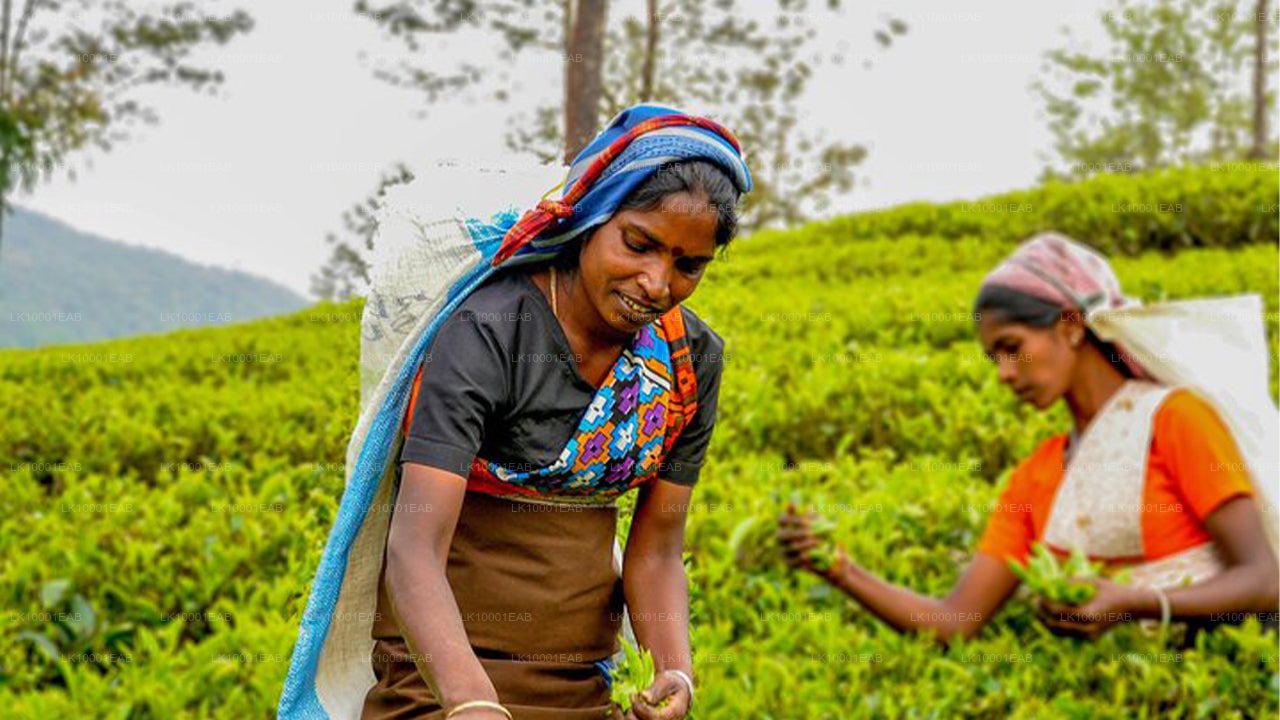
The plantation landscape is another living archive. The Dimbula, Uva, and Nuwara Eliya tea districts are criss-crossed with estate roads and dotted with bungalows built for British planters. Staying at a heritage property like The Grand Hotel, Nuwara Eliya connects you directly to that era. The Bluefield Tea Gardens offer a working-estate experience where you can trace the journey from leaf to cup — a tradition that began under British commercial ambition but is now entirely Sri Lankan in character.
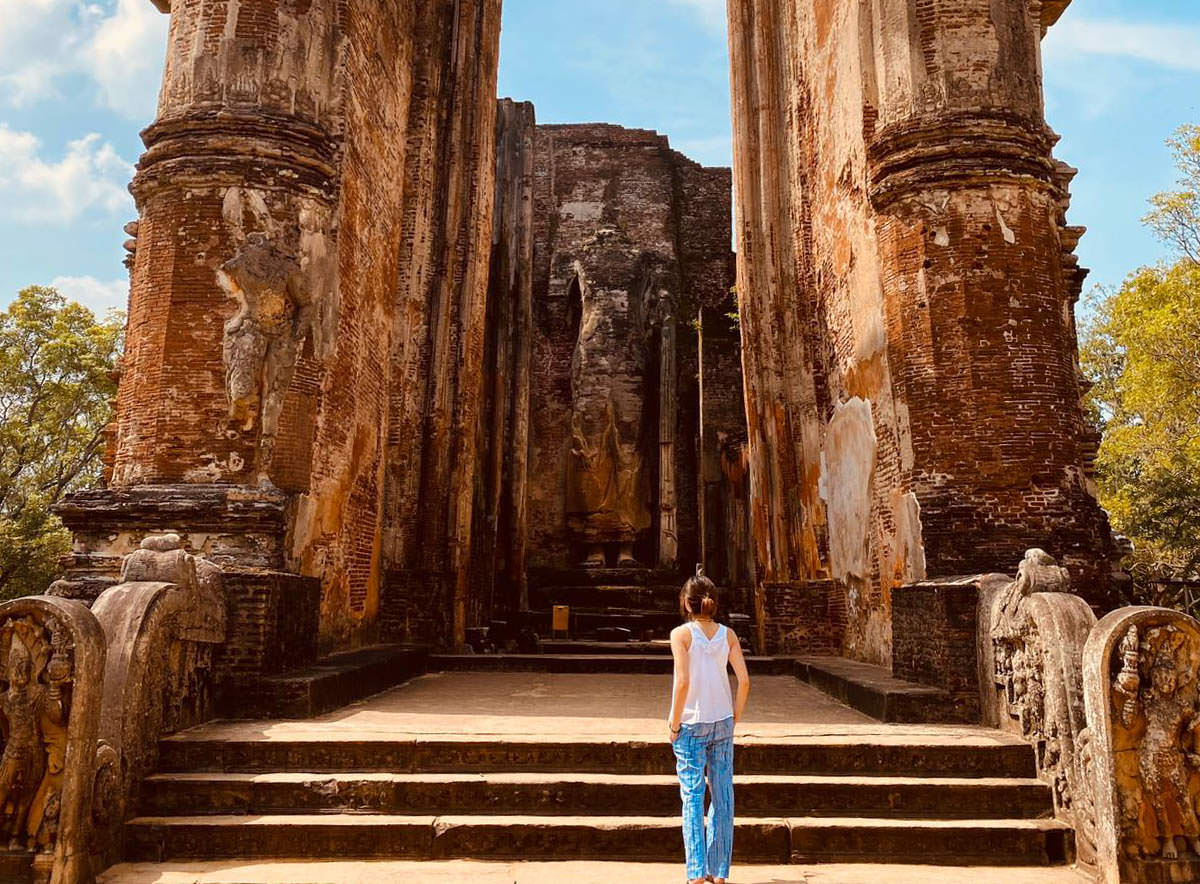
The railways built under British rule are among the most scenic in Asia. The line from Kandy to Ella, threading through the central highlands, passes through tunnels, over viaducts, and alongside tea estates in a journey that rewards patience. Polonnaruwa, one of the great medieval capitals of ancient Lanka, predates colonialism entirely — its dagobas, palace ruins, and rock-carved Buddhas represent the island's own civilisational depth, quite apart from anything the British, Dutch, or Portuguese brought. A visit to Polonnaruwa reframes the island's story: Ceylon and Sri Lanka are chapters in a much longer narrative.
What does the name "Ceylon" mean for travellers today?
For many international visitors, "Ceylon" carries a particular romantic weight — conjuring images of mist-covered tea estates, spice gardens, and an island at the crossroads of ancient Indian Ocean trade routes. The name lives on commercially in ways the Sri Lankan government actively promotes: Ceylon Tea carries a protected geographical indication, and Ceylon black pepper and Ceylon cinnamon are recognised for their distinct regional character. When you purchase a single-estate tea or a packet of true cinnamon here, you are participating in a heritage that stretches back centuries.
Travelling through Sri Lanka today means moving between layers of time: prehistoric cave settlements, iron-age kingdoms, medieval hydraulic civilisations, colonial port cities, and a contemporary nation navigating its own pluralist identity. The word "Ceylon" is a hinge between those layers — a reminder that the island has always been shaped by outsiders who came for its resources and stayed for its beauty, while the people who called it home worked continuously, and ultimately successfully, to govern it on their own terms.